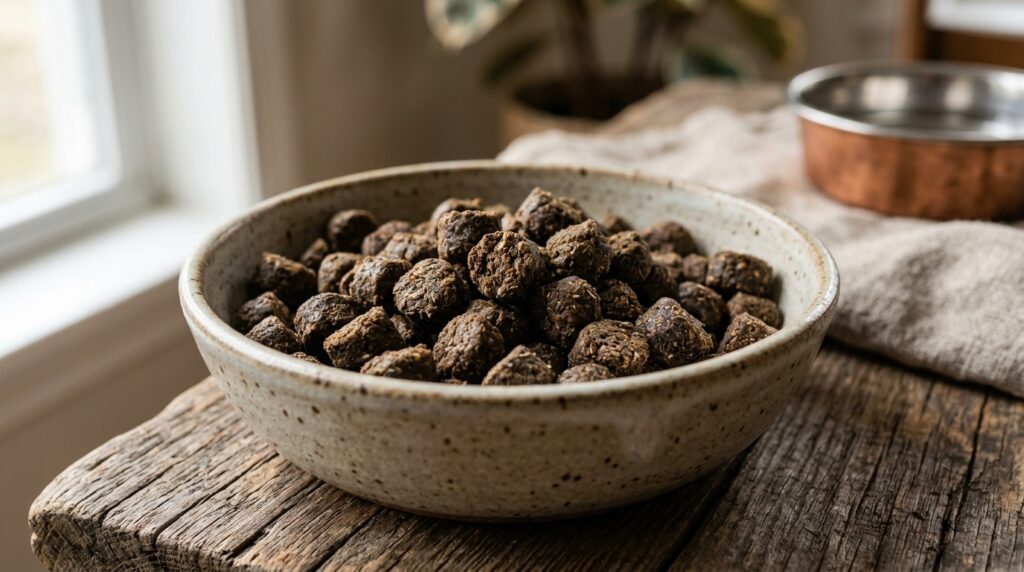
Cold-pressed dog food represents a revolutionary leap beyond conventional kibble extrusion. While standard dry kibble is blasted with high steam and temperatures up to 150°C, cold-pressing shapes ingredients under gentle pressure at 45–75°C. In the stomach, cold-pressed pellets break down gently from the outside in without swelling, drastically reducing bloat risk and promoting smooth digestion.
At a Glance: Top Cold-Pressed Dog Foods in the UK
| Food & Brand | BBH Score | Protein / Fat | Thermal Pressing Advantage | Est. Daily Cost | Check Price |
|---|---|---|---|---|---|
|
Tribal Fresh Pressed Turkey
#1 Cold-Pressed Pick | 87/100 | 26% / 13% | Fresh Meat Hydrolyzed at Low Temp | Moderate | Check Amazon |
|
Walker & Drake Duck & Plum
Best British Cold-Pressed | 86/100 | 24% / 12% | British Made Low-Temperature Pellets | Moderate | Check Amazon |
Macronutrient Breakdown: Cold-Pressed Nutrient Density
Because thermal stress is minimized, natural bioactive enzymes, botanical antioxidants, and delicate heat-sensitive omega fats remain structurally intact.
Ideal Cold-Pressed Macronutrient Split (Dry Matter)
Intact Protein (28%)
Cold-Infused Fat (14%)
Gently Steamed Carbs (58%)
Cold-pressed pellets dissolve rapidly in gastric fluids within 20 minutes, unlike extruded kibble which floats and swells with water.
UK Daily Feeding Cost: Cold-Pressed Spectrum
Estimated Daily Feeding Cost (15kg Medium Adult Dog)
Standard Cold-Pressed
Moderate
Wilsons / Forthglade Dry
Gently Pressed Fresh Meat
Moderate
Tribal Fresh Pressed
Specialist Single Source
Moderate
Walker & Drake / Guru
Raw-Alternative Pressed
Premium
Markus-Mühle / Gentle Dog
Spotlight: Our Top Cold-Pressed Pick
#1 Top Cold-Pressed Alternative
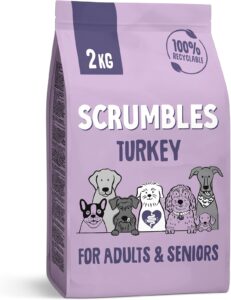 ★ 85/100 Nutrition Score
Scrumbles Natural Dog Food with Gut Support & Prebiotics
Why Vets Recommend It: Crafted with whole natural meats and prebiotic slippery elm bark to optimize gastric breakdown, providing a gentle alternative to extruded foods for sensitive digestive systems.
- Easily digested without causing gastric heaviness
- Includes live prebiotics and slippery elm
- Naturally preserved without artificial chemicals
- Dense food requires careful digital weighing
- Store in a cool dry pantry to preserve freshness
What to Look For vs Avoid in Cold-Pressed Food
Look For (Cold-Pressed Integrity)
- Low Thermal Processing (<75°C): Ensures true cold-pressed production
- Rapid In-Water Breakdown: Dissolves smoothly without expanding in volume
- Fresh Meat Puree Inclusion: Superior biological protein value
- Gentle Fiber Sources: Beet pulp, sweet potato, and pumpkin
Avoid (Thermal Traps)
- Over-Portioning by Volume: Cold-pressed pellets are denser than extruded kibble
- High Heat Extrusion Disguised as Pressed: Check manufacturing temperature
- Damp Storage Environments: Moisture breaks down pressed pellets quickly
- Rapid Diet Swapping: Transition over 7 to 10 days
Frequently Asked Questions
Why does cold-pressed dog food not swell in the stomach? ▼
Standard kibble is puffed with air and starch during high-heat extrusion, making it absorb liquid and swell like a sponge. Cold-pressed food is gently compressed without air, causing it to break down and dissolve smoothly from the outside in without expanding in volume.
Can I feed cold-pressed alongside a raw food diet? ▼
Yes! Because cold-pressed dog food breaks down in the stomach at a very similar rate to raw meat (unlike extruded kibble which digests much slower), it is widely endorsed by raw feeders as a convenient traveling alternative.